DIY mini splits ranked by price per BTU
That is the lowest price per BTU among the Amazon listings we track and can buy today: the TABU 24,000BTU Mini Split Air Conditioner wi at 24,000 BTU/h. 31 with a live price · cheapest $28.75 per 1,000 BTU/h for single-zone systems. Prices retrieved: September 7, 2026, 20:37 UTC.
Where each segment sits
Every capacity on the same $/1,000 BTU axis as the ranking above, so the segments can be compared rather than just listed.
| Segment | Live | Cheapest | Range across all systems, $29–$257 per 1,000 BTU |
|---|---|---|---|
| 9,000 BTU | 6 | $64.44 | |
| 12,000 BTU | 13 | $45.83 | |
| 18,000 BTU | 8 | $44.44 | |
| 24,000 BTU | 5 | $28.75 | |
| 36,000 BTU | 5 | $71.43 | |
| Multi-zone | 9 | $61.11 | |
| All single-zone | 31 | $28.75 |
Whether the saving is worth the work is a number, not a slogan: installation cost against the cheapest DIY unit at each size.
DIY single-zone systems
| $/1,000 BTU | Price | BTU/h | Zones | Efficiency | Volts | System |
|---|---|---|---|---|---|---|
| per 1,000 BTU/hBest | price$689.99 | 24,000 | Single | 21SEER2 | 220-230V |  TABU 24,000BTU Mini Split Air Conditioner wi · 3rd-party TABU 24,000BTU Mini Split Air Conditioner wi · 3rd-partyAll specs
|
| per 1,000 BTU/h | price$799.99 | 18,000 | Single | 19SEER2 | 208-230V |  Electactic SE7203SP 18K Easy DIY Electactic SE7203SP 18K Easy DIYAll specs
|
| per 1,000 BTU/h | price$549.98 | 12,000 | Single | 18SEER2 | 115V |  Albott DIY 12K Pro Fast-Fit · 3rd-party Albott DIY 12K Pro Fast-Fit · 3rd-partyAll specs
|
| per 1,000 BTU/h | price$559.99 | 12,000 | Single | 18SEER2 | 220V |  Albott Easy DIY 12K 220V · 3rd-party Albott Easy DIY 12K 220V · 3rd-partyAll specs
|
| per 1,000 BTU/h | price$569.99 | 12,000 | Single | 18SEER2 | 115V | Albott Easy DIY 12K 115V · 3rd-partyAll specs
|
| per 1,000 BTU/h | price$599.99 | 12,000 | Single | 23SEER2 | — |  TURBRO 12,000 BTU Ductless Mini Split Invert · 3rd-party TURBRO 12,000 BTU Ductless Mini Split Invert · 3rd-partyAll specs
|
| per 1,000 BTU/h | price$599.99 | 12,000 | Single | 18SEER2 | 220V | YUMPIE Easy DIY 12,000 BTU 220V · 3rd-partyAll specs
|
| per 1,000 BTU/h | price$899.99 | 18,000 | Single | 23SEER2 | — | TURBRO 18,000 BTU Ductless Mini Split Invert · 3rd-partyAll specs
|
| per 1,000 BTU/h | price$649.99 | 12,000 | Single | 24SEER2 | — | TURBRO 12,000 BTU Ductless Mini Split Invert · 3rd-partyAll specs
|
| per 1,000 BTU/h | price$579.99 | 9,000 | Single | 23SEER2 | 115V | TURBRO 9,000 BTU Ductless Mini Split 115V · 3rd-partyAll specs
|
| per 1,000 BTU/h | price$2,499.98 | 35,000 | Single | 22SEER2 | 208-230V |  PerfectAire Perfect Aire 35000 BTU Quick Connect… · 3rd-party PerfectAire Perfect Aire 35000 BTU Quick Connect… · 3rd-partyAll specs
|
| per 1,000 BTU/h | price$2,649.00 | 36,000 | Single | 23SEER2 | 230V |  Klimaire DIY 36,000 BTU 23 SEER2 Quick Conne · 3rd-party Klimaire DIY 36,000 BTU 23 SEER2 Quick Conne · 3rd-partyAll specs
|
| per 1,000 BTU/h | price$1,965.00 | 24,000 | Single | 23SEER2 | 230V |  Klimaire DIY 24,000 BTU 23 SEER2 Quick Conne · 3rd-party Klimaire DIY 24,000 BTU 23 SEER2 Quick Conne · 3rd-partyAll specs
|
| per 1,000 BTU/h | price$2,025.45 | 24,000 | Single | 17SEER2 | 230V | 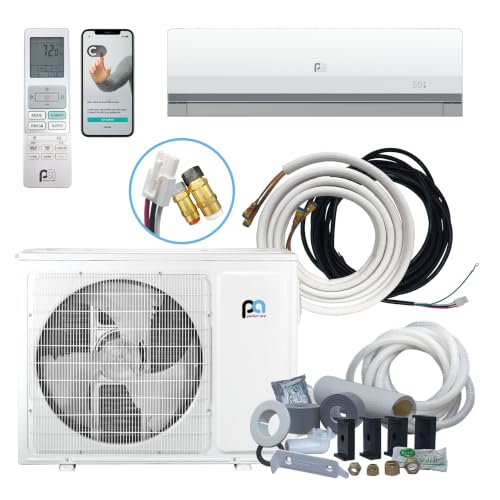 PerfectAire Perfect Aire 24,000 BTU Mini Split AC &… · 3rd-party PerfectAire Perfect Aire 24,000 BTU Mini Split AC &… · 3rd-partyAll specs
|
| per 1,000 BTU/h | price$1,789.00 | 18,000 | Single | 23SEER2 | 230V |  Klimaire DIY 18K Quick Connect · 3rd-party Klimaire DIY 18K Quick Connect · 3rd-partyAll specs
|
| per 1,000 BTU/h | price$3,749.00 | 36,000 | Single | 18SEER2 | 208-230V |  MRCOOL DIY 36K 4th Gen · 3rd-party MRCOOL DIY 36K 4th Gen · 3rd-partyAll specs
|
| per 1,000 BTU/h | price$1,489.00 | 12,000 | Single | 23SEER2 | 230V | 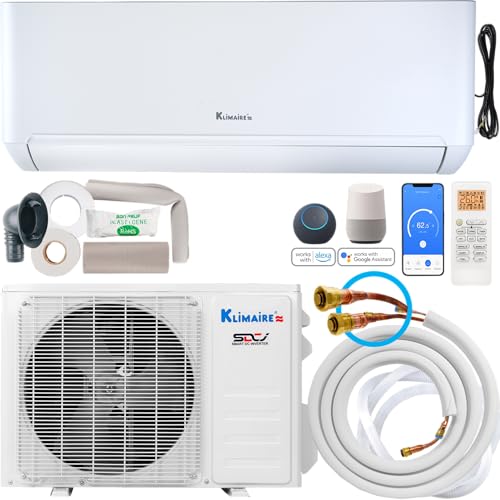 Klimaire DIY 12,000 BTU 23 SEER2 Quick Conne · 3rd-party Klimaire DIY 12,000 BTU 23 SEER2 Quick Conne · 3rd-partyAll specs
|
| per 1,000 BTU/h | price$1,589.00 | 12,000 | Single | 23SEER2 | 115V |  Klimaire DIY 12,000 BTU 23 SEER2 Quick Conne · 3rd-party Klimaire DIY 12,000 BTU 23 SEER2 Quick Conne · 3rd-partyAll specs
|
| per 1,000 BTU/h | price$1,649.00 | 12,000 | Single | 19.5SEER2 | 115V |  MRCOOL Easy Pro 12K 5th Gen · 3rd-party MRCOOL Easy Pro 12K 5th Gen · 3rd-partyAll specs
|
| per 1,000 BTU/h | price$3,329.00 | 24,000 | Single | 18SEER2 | 230V |  MRCOOL 24000 BTU 230V Ductless Inverter Mini · 3rd-party MRCOOL 24000 BTU 230V Ductless Inverter Mini · 3rd-partyAll specs
|
| per 1,000 BTU/h | price$1,719.99 | 12,000 | Single | 17SEER2 | 115V | PerfectAire Perfect Aire 12,000 BTU Mini Split AC &… · 3rd-partyAll specs
|
| per 1,000 BTU/h | price$1,799.99 | 12,000 | Single | 19.5SEER2 | 115V |  MRCOOL DIY 12K 5th Gen MRCOOL DIY 12K 5th GenAll specs
|
| per 1,000 BTU/h | price$2,799.99 | 18,000 | Single | 23.5SEER2 | 230V |  Zone Air 18,000 BTU DIY Ductless Mini Split · 3rd-party Zone Air 18,000 BTU DIY Ductless Mini Split · 3rd-partyAll specs
|
| per 1,000 BTU/h | price$2,909.00 | 18,000 | Single | 21SEER2 | — | MRCOOL DIY 18K 5th GenAll specs
|
| per 1,000 BTU/h | price$1,569.00 | 9,000 | Single | 17.5SEER2 | 115V |  MRCOOL 9000 BTU Ductless Inverter Mini Split · 3rd-party MRCOOL 9000 BTU Ductless Inverter Mini Split · 3rd-partyAll specs
|
| per 1,000 BTU/h | price$2,199.99 | 12,000 | Single | 23SEER2 | 115V |  Zone Air 12,000 BTU DIY Ductless Mini Split 115V · 3rd-party Zone Air 12,000 BTU DIY Ductless Mini Split 115V · 3rd-partyAll specs
|
| per 1,000 BTU/h | price$1,667.98 | 9,000 | Single | 18SEER2 | 115V | PerfectAire Perfect Aire 9000 BTU Quick Connect · 3rd-partyAll specs
|
| per 1,000 BTU/h | price$2,249.99 | 12,000 | Single | 24SEER2 | 230V | Zone Air 12,000 BTU DIY Ductless Mini Split 230V · 3rd-partyAll specs
|
| per 1,000 BTU/h | price$2,099.99 | 9,000 | Single | 23SEER2 | 115V | Zone Air 9,000 BTU DIY Ductless Mini Split 115V · 3rd-partyAll specs
|
| per 1,000 BTU/h | price$2,149.99 | 9,000 | Single | 24SEER2 | 230V | Zone Air 9,000 BTU DIY Ductless Mini Split 230V · 3rd-partyAll specs
|
| per 1,000 BTU/h | price$2,309.00 | 9,000 | Single | 23.6SEER2 | 115V |  MRCOOL DIY 9K 4th Gen · 3rd-party MRCOOL DIY 9K 4th Gen · 3rd-partyAll specs
|
What “DIY” covers, and where it stops
A pre-charged DIY system ships with the refrigerant already sealed inside a line set that connects with threaded quick-connect fittings. That removes the one step a homeowner legally and practically cannot do: evacuating and charging the line set, which needs a vacuum pump, a manifold gauge set and, in the United States, EPA Section 608 certification to handle refrigerant. Removing that step is the entire value proposition, and it is what makes the equipment price the total price.
What it does not remove:
- The electrical work
- A 115V system often reaches an existing circuit. A 208-230V system needs a dedicated circuit and a disconnect, which in most jurisdictions means a permit and an electrician. That cost is real and it is not in any $/BTU on this site.
- Mounting
- The outdoor unit needs a pad or wall bracket and the wall needs a three-inch core hole, drilled on a slight downward angle for condensate.
- Line set length
- The sealed charge supports the length supplied, commonly 16 or 25 feet. Going further generally means a technician after all, at which point the DIY premium bought you nothing.
- Permits and inspection
- Requirements are local. Some jurisdictions treat a pre-charged system as an appliance install, others do not.
We are not an HVAC contractor and nothing here is installation advice. Check your local code before ordering, not after.
Why the ranking excludes professional-install equipment
Conventional systems can look dramatically cheaper per BTU, and for a comparison site that would be a tempting table to publish. It would also be dishonest: those systems carry roughly $1,000–$3,500 of installation that a DIY system does not, so putting the two in one ranking would let the cheapest-looking row be the more expensive purchase. If professional-install equipment is catalogued here later, it will sit in its own class with its own crown, and the difference will be stated on the row rather than buried in a footnote.